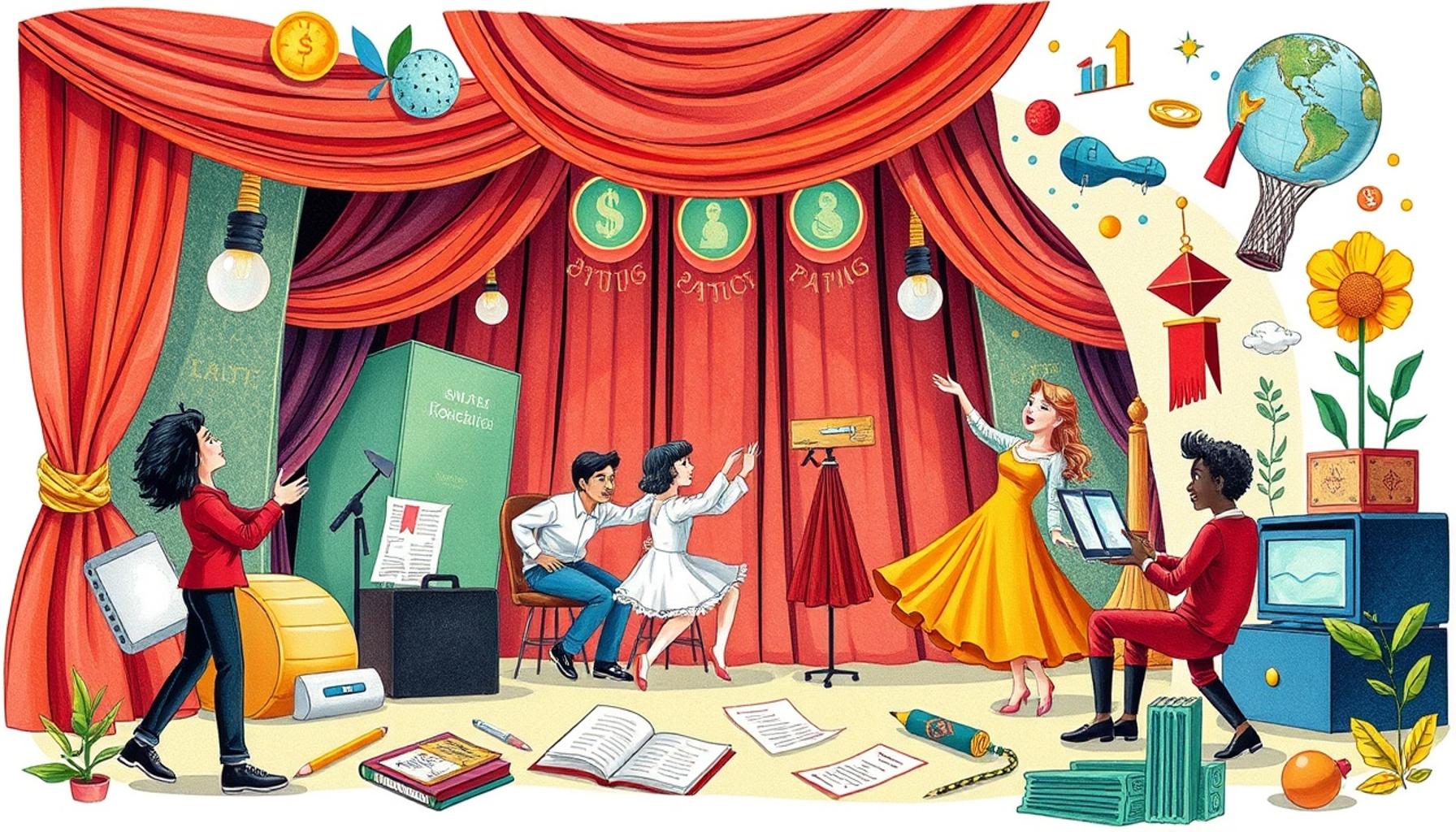
The Role of Music in Building Scenic Narratives: Synergy between Sound and Performance
The Transformative Role of Music in Performance Art
Music serves as a powerful conduit that enhances the vibrancy of performance art. It is not merely an auditory backdrop but a decisive factor that crafts impactful scenic narratives that not only engage but also resonate deeply with audiences. By weaving together sound and story, performances become multidimensional experiences that evoke emotions and provoke thought.
- Setting the Mood: One of the most essential roles of music is its ability to establish an emotional environment. For example, a haunting violin piece can create an atmosphere of tension or foreboding, while an uplifting orchestral arrangement may bring forth feelings of hope or joy. Films like “Inception,” where Hans Zimmer’s score fluctuates between pulsating rhythms and serene melodies, illustrate how music can dictate the emotional journey of a scene.
- Character Development: Music often acts as an audio identity, offering insights into a character’s psyche and growth. Consider the character of Elsa in Disney’s “Frozen.” Her theme, “Let It Go,” encapsulates her struggle for freedom and self-acceptance. As the story unfolds, variations of her motif reflect her emotional evolution, helping the audience connect with her journey.
- Creating Tension: The dynamics of music, such as crescendos and shifts in tempo, are essential tools for building suspense and excitement. This is particularly evident in thrillers where the score heightens viewers’ anticipation. Alfred Hitchcock’s films, notably “Psycho,” employ sharp, dissonant strings to escalate a viewer’s sense of unease, making moments of climax nearly unbearable.
Across diverse genres—spanning theater, film, dance, and live music—artists harness the power of sound to forge connections and elevate storytelling. The seamless integration of music into performances invites audiences to delve deeper into the narrative, fostering a shared experience that transcends words.
- Film Scores: Classic scores like John Williams’ for “Star Wars” or the evocative themes in “Jurassic Park” do not simply accompany scenes; they are integral to experiencing the thrill and wonder of the narrative. The iconic “Imperial March,” for instance, not only signals Darth Vader’s presence but evokes dread and authority in viewers’ minds.
- Theater Productions: Musicals such as “Hamilton” and “The Lion King” demonstrate how rich soundscapes enhance storytelling. In “Hamilton,” Lin-Manuel Miranda’s use of hip-hop not only makes the historical narrative accessible but allows characters to express their complexity and aspirations through informed musical choices.
- Dance Performances: Music and movement are intrinsically linked in dance. Choreographers like Martha Graham or twirling ballet companies brilliantly synchronize gestures with sound, turning silence into a canvas painted with expressive body language, bringing stories to life purely through motion and melody.
Exploring the synergy between music and performance art reveals that sound is not just an accomplice but a central character in the construction of narratives. This intricate relationship heightens our appreciation for diverse media, encouraging us to analyze and contemplate music’s significant impact across the spectrum of artistic expression. As we become more aware of these connections, we can further appreciate not just the art itself, but also the profound emotional and cultural dialogues that music facilitates within performance. Whether watching a moving film, attending a captivating theater show, or enjoying a dance performance, the deep ties between music and narrative are all around us, inviting continual engagement and exploration.
DIVE DEEPER: Click here to learn more
Soundscapes: The Essence of Emotional Connection
The delicate interplay between music and performance art underscores the essence of human emotion, transforming solitary sound into a communal experience. Music acts as a bridge that connects audience members with characters and plotlines, eliciting empathy and deeper engagement. As artists choreograph their narratives, the synergy between sound and performance becomes palpably evident, inviting audiences to embark on a sensory journey.
- Music as Emotional Currency: One of the most profound effects of music is its ability to communicate emotions that words may fail to convey. Take, for instance, emotional ballads in musical theater; songs like “Somewhere” from “West Side Story” provide a rich emotional subtext, allowing characters to express longing and hope. Audiences not only hear music but feel it, tapping into their own life experiences and memories, fostering a unique personal connection to the story.
- Dramatic Pacing: The tempo of music can significantly influence the pacing of a performance. In action films, fast-paced scores raise adrenaline levels, propelling viewers into the narrative’s frantic heartbeat. Consider the chase sequences in films like “Mad Max: Fury Road,” where thunderous percussion drives the action forward, amplifying feelings of urgency and excitement. In contrast, slower compositions create reflective moments, allowing the audience space for contemplation and emotional absorption.
- Narrative Cohesion: Music establishes a sense of continuity within a performance, enhancing the narrative’s unity. This cohesion is not merely about the themes and motifs associated with particular characters but also about how music can reinforce the setting and era of a story. Historical dramas, such as “The Greatest Showman,” utilize period-appropriate musical styles that root the viewer in time, enriching their understanding of the characters’ struggles and triumphs.
The significance of incorporating music into performances extends beyond mere enhancement; it molds the very fabric of storytelling. Just as a painter selects colors to convey emotion and atmosphere, performance artists meticulously choose musical elements to shape the perception and experience of their work. Whether it’s the subtle undertones of a piano intertwining with soft lighting on stage or a powerful orchestral crescendo accompanied by vivid choreography, music remains a vital pillar supporting the entire narrative architecture.
This intentional pairing of auditory and visual elements gives birth to what many refer to as a soundscape. Soundscapes envelop the audience, immersing them deeper into the narrative landscape and amplifying their emotional responses. As we navigate through varied art forms, it is crucial to explore how these soundscapes cultivate a more profound understanding of character emotions and plot development, driving us to reflect on our own connections to the stories portrayed.
When we delve deeper into the role of music in building scenic narratives, we discover that music transcends mere background ambiance; it is a critical element that enhances emotional connectivity and audience engagement. By expertly integrating sound with performance, artists can create a multisensory experience that captivates viewers and deepens their immersion in the story being told. The synergy between these elements not only fosters a clearer understanding of the narrative but also evokes profound emotional responses.
For instance, consider theatrical productions where a haunting score accompanies dramatic scenes. This auditory backdrop amplifies the tension and poignancy, guiding the audience’s emotional journey. Directors often choose specific musical motifs to represent characters or themes, allowing viewers to subconsciously link soundscapes with visual cues. As a result, performances can resonate at a deeper level, forging lasting memories.
Moreover, live performances benefit immensely from the dynamic interplay of sound and action. The rhythm and tone of music can mirror the intensity of physical movements, adding a cohesive layer to the experience. This not only keeps the audience engaged but encourages participation, whether through clapping, humming along, or even moving with the music. Audiences are not merely passive observers; they become part of the narrative fabric.
The fusion of sound and performance also encourages innovative storytelling techniques. Contemporary artists explore genres, styles, and technologies, experimenting with how music can be used to manipulate moods and enhance storytelling elements. Cross-disciplinary collaborations are on the rise, where filmmakers, dancers, and musicians unite to create groundbreaking works that challenge traditional narrative forms. By expanding the boundaries of performance art, the interplay of music and movement fosters a new era of creativity.
| Advantage | Detail |
|---|---|
| Emotional Engagement | Music deepens emotional responses, making narratives more impactful. |
| Enhanced Storytelling | The synergy between sound and performance innovates narrative techniques. |
As we explore these themes, it becomes evident that the marriage of music and performance art is not merely functional but profoundly transformative, pushing the boundaries of how stories are told and experienced. From traditional theaters to modern multimedia performances, the influence of sound will undoubtedly continue to shape the landscape of scenic narratives in the future.
DIVE DEEPER: Click here to unlock your creative potential
Musical Themes: Characterization and Storytelling
The presence of musical themes in performances serves not only as a backdrop but as a legitimate character within the narrative itself. Composers often craft distinct motifs for individual characters, subtly guiding the audience’s emotions and understanding. For example, in Wagner’s operas, recurring themes associated with specific characters or ideas help to reinforce their identity and emotional states. This technique, known as leitmotif, illustrates how music can tell a story as eloquently as dialogue, weaving an intricate tapestry of sound that enriches the visual narrative.
- Visual Representation: In contemporary theater, visuals and music coalesce to create rich, immersive experiences. Consider the work of Lin-Manuel Miranda in “Hamilton,” where a unique blend of hip-hop and traditional musical theater genres reflects the historical context and emotional turmoil of its characters. Each musical number not only advances the narrative but also provides insight into character motivations, creating an engaging interplay between the auditory and visual realms.
- The Emotional Arc: A carefully curated musical score can mirror character development, enhancing an audience’s comprehension of their journeys. For instance, in Pixar films such as “Up,” the sweeping orchestral compositions elevate pivotal scenes, conveying a powerful emotional arc that resonates with viewers. This coupling of sound and story elicits tears, laughter, and nostalgia, proving that music not only accompanies a narrative but is integral to its emotional resonance.
- Symbolic Functions: Music also functions symbolically within narratives, signifying more than just mood or emotion. In the film “Inception,” composer Hans Zimmer crafted a score that melds auditory cues with the film’s exploration of dreams and reality. Through unique sound signatures, such as the slowing time motif represented by the hauntingly beautiful piece “Time,” the score transcends mere entertainment and becomes a crucial element of the storytelling process.
The dynamic role of music in performance art goes beyond the surface level of emotional manipulation. It serves as a foundational element in building scenic narratives, allowing audiences to not only observe but also to feel and connect. The incorporation of musical elements into narratives opens new avenues for storytelling, where sonic textures can offer layers of meaning that enrich our engagement with art. This increasingly nuanced understanding has implications ranging from how arts education is approached to how audiences engage with various forms of performance.
Moreover, as technology evolves, the possibilities for integrating music into scenic narratives expand exponentially. From virtual reality experiences that harness immersive sound design to interactive performances where audience participation influences musical outcomes, the future of storytelling through sound seems limitless. This evolution challenges creators to explore and experiment, compelling them to reconsider how music and performance can work in harmony to bring to life stories in fresh and engaging ways.
DIVE DEEPER: Click here to uncover the connection
Conclusion
In exploring the role of music in building scenic narratives, it becomes evident that the synergy between sound and performance is a powerful force that elevates storytelling to profound heights. Music serves not merely as an accompaniment but as a vital thread woven into the fabric of the narrative, enhancing characterization, evoking emotions, and providing symbolic depth. By utilizing techniques like leitmotif and innovative scoring, composers throughout history have demonstrated how sound can narrate alongside visuals, deepening the audience’s engagement and understanding.
The impact of music in performance art stretches beyond traditional boundaries, shaping how we perceive stories across various mediums— from theater to cinema and beyond. With advancements in technology, creators are constantly challenged to invent new ways to integrate musical elements into narratives, resulting in captivating experiences that blur the lines between audience and performance. Interactive performances, for instance, invite viewers to become participants in the narrative, reinforcing the idea that sound and story are intertwined.
As we look to the future, the potential for such integration appears limitless. This ongoing exploration not only enriches the art form but also broadens the horizons of artistic expression, prompting both creators and audiences to reconsider the essence of storytelling. In recognizing the profound influence of music in shaping scenic narratives, we can appreciate the intricate dance of sound and performance, inviting everyone to delve deeper into the world where melody and meaning converge.
Related posts:
The Intersection of Visual and Performative Arts: New Frontiers in Artistic Creation
Exploring the World of Improvisation: Theatrical Techniques to Stimulate Creativity
Performing Arts and Sustainability: How Groups Are Promoting Environmental Awareness Through Perform...
The Evolution of Performing Arts: How New Technologies Are Transforming Theatre
The Importance of Improvisation in Performing Arts: Developing Creativity and Self-Confidence
The Renaissance of Street Theatre: How Performative Arts are Redefining Public Spaces in the Modern ...

Beatriz Johnson is a seasoned creative enthusiast and writer with a passion for simplifying the intricacies of artistic hobbies and DIY projects. With over a decade of experience exploring various creative fields, she specializes in topics like crafting, painting, and innovative DIY techniques. Through her work, Beatriz inspires readers to unleash their creativity, try new artistic endeavors, and stay inspired in the ever-evolving world of creative hobbies.