

The Growing Role of Recursive Neural Networks in Language Processing
The evolution of technology continues to reshape the way we interact with words. In recent years, Recursive Neural Networks (RecNNs) have emerged as a pivotal player in the field of Natural Language Processing (NLP). These advanced algorithms unlock new possibilities in understanding and generating human language, leading to significant enhancements in how machines interpret and respond to human communications.
What Makes RecNNs Unique? The architecture of Recursive Neural Networks permits them to process data in a hierarchical manner. This design is particularly advantageous when dealing with the complex structures inherent in human language. For instance, while traditional neural networks may struggle with long-range dependencies within a sentence, RecNNs excel at understanding the relationships between nested phrases and clauses. Such capabilities enable them to:
- Understand complex sentence relationships: By dissecting the grammar and syntax, RecNNs can grasp subtle nuances, such as distinctions in meaning derived from word placement.
- Generate contextually relevant responses: These networks can produce text that feels more conversational and context-aware, improving user experiences in applications like chatbots.
- Analyze the sentiment and intention behind language: Using advanced algorithms, RecNNs can interpret emotional nuances, which is crucial for businesses seeking to understand customer feedback on platforms like Twitter or Reddit.
Additionally, the applicability of RecNNs spans multiple domains, such as:
- Chatbots and virtual assistants: Companies like Google and Amazon leverage these technologies to enhance user interaction, leading to more intuitive and helpful virtual experiences.
- Sentiment analysis in social media: Organizations utilize RecNNs to gauge public sentiment regarding products or political events, allowing them to tailor their strategies based on real-time feedback.
- Machine translation services: Services like Google Translate have integrated RecNNs to improve translation accuracy and fluency, making cross-language communication smoother than ever.
With these capabilities, recursive neural networks are not just emerging technology trends but rather the forebears of a linguistic revolution. As we delve deeper into this subject, the potential impact of RecNNs on the future of NLP unfolds, revealing a landscape where machines understand language with remarkable sophistication. The implications of this advancement extend beyond technical jargon; they promise a future where communication is more intuitive and human-like than ever before.
By fostering sophisticated interactions and promoting seamless communication, RecNNs might redefine our connection with technology. As we continue to explore this transformative era of language processing, the possibilities appear infinite, urging us to investigate how these advancements will shape our everyday lives.
DISCOVER MORE: Click here to learn how intelligent agents are revolutionizing financial fraud prevention
Unlocking the Potential of Recursive Neural Networks
As the digital landscape continues to expand, the need for advanced Natural Language Processing (NLP) solutions becomes increasingly imperative. Recursive Neural Networks (RecNNs) represent a significant leap forward in this domain, offering powerful tools to tackle the inherent complexities of human language. By employing a hierarchical approach to data processing, RecNNs are able to capture the intricate relationships between words and phrases, allowing for a more profound understanding of context and meaning.
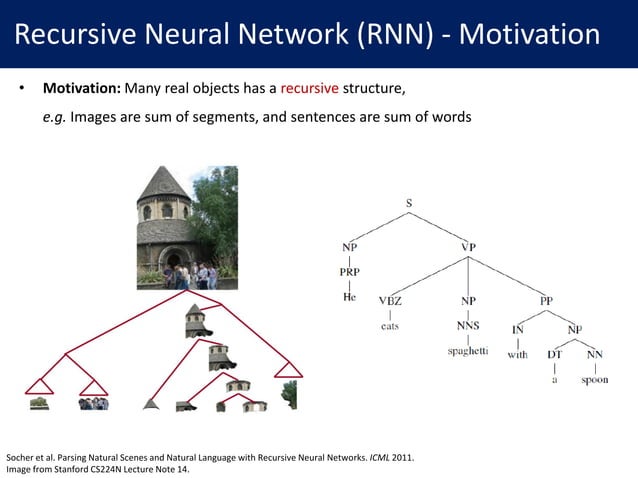
The Hierarchical Processing Advantage is one of the defining characteristics of Recursive Neural Networks. Unlike traditional neural networks that typically analyze data in a linear fashion, RecNNs process input data in multiple layers of abstraction. This allows them to construct a mental model of sentences and phrases, preserving the structural relationships and latent meanings that are often lost in simpler models.
To illustrate this, consider how a RecNN might interact with a simple sentence like “The cat sat on the mat.” A typical neural network may focus solely on individual words, missing the overall context and relationships. In contrast, a RecNN dissects this sentence into its components, recognizing that the cat is the subject and the mat is the object, leading to a more nuanced interpretation. This capability opens the door to several key advantages in the field:
- Enhanced Understanding of Syntax and Semantics: Recursive Neural Networks excel at parsing complex sentence structures, enabling them to differentiate between various syntactic forms and their respective meanings.
- Greater Context Awareness: RecNNs can better retain and utilize context from previous statements in a conversation, allowing for more coherent and meaningful exchanges between machines and humans.
- Improved Machine Learning Models: With their ability to understand hierarchical data, RecNNs contribute to the creation of more sophisticated language models that perform better in various NLP tasks, including machine translation, sentiment analysis, and text summarization.
While still a developing technology, RecNNs have already shown promise in several applications, leading to innovations that impact our daily interactions with technology. For instance, smart assistants like Apple’s Siri and Google Assistant utilize RecNN-driven algorithms to parse user queries, ensuring that responses are not only accurate but also contextually relevant. This enhances user satisfaction, as the technology becomes increasingly capable of understanding natural dialogue versus simple command-based interactions.
Moreover, in the realm of customer service, companies are leveraging RecNNs to power chatbots that can respond to inquiries with human-like understanding and empathy. By integrating these networks into their systems, businesses can provide more effective support, reducing response times and improving customer experience.
The deployment of Recursive Neural Networks is reshaping the future of Natural Language Processing and changing how machines interact with human language. As advancements in this technology continue to unfold, it becomes clear that we stand on the brink of a new era, characterized by more sophisticated, intuitive communication avenues. In the upcoming sections, we will explore the implications of these advancements and what they mean for the integration of language processing technologies in our everyday lives.
| Advantage | Description |
|---|---|
| Hierarchical Representation | Recursive Neural Networks (RvNNs) excel at modeling data with hierarchical structures, making them ideal for applications in NLP where the syntax and semantics of language can be complex. |
| Contextual Understanding | These networks allow for an improved contextual understanding of phrases and sentences, paving the way for more accurate language processing, including sentiment analysis and translation. |
As we delve deeper into the realm of *Natural Language Processing*, Recursive Neural Networks stand out for their ability to capture intricate relationships within data. The hierarchical representation empowers machines to grasp complex linguistic structures, enabling applications that require a nuanced understanding of language. Moreover, the increased contextual awareness fostered by RvNNs enhances the accuracy of interactions between humans and machines, setting the stage for innovative services and applications in fields ranging from customer support to content creation. Through continual advancements in this area, the future of NLP promises to transform the way technology interprets and interacts with human language, making it more intuitive and efficient. Interested readers should explore further how these technologies evolve and the implications for industries worldwide.
INTERESTED IN LEARNING MORE? Click here to dive deeper
The Transformative Impact of RecNNs on Language Processing Applications
As Recursive Neural Networks (RecNNs) continue to reshape the landscape of Natural Language Processing (NLP), their applications extend far beyond basic interactions, delving into realms that enhance both business efficiency and user engagement. This transformative power comes from the networks’ ability to learn complex patterns, allowing for the development of applications that address unique challenges inherent in human language.
Sentiment Analysis is one area where RecNNs shine particularly bright. Businesses today heavily rely on analyzing consumer sentiment derived from social media, reviews, and forums. Traditional methods often lack the depth required to assess nuanced sentiment that stems from underlying context. RecNNs, however, excel at recognizing subtleties—such as sarcasm or irony—that can make all the difference in determining whether a customer is genuinely satisfied or frustrated. A notable example is how platforms like Twitter employ RecNN technology to gauge public sentiment during political events or product launches, providing real-time insights that can significantly influence marketing strategies and public relations work.
Furthermore, in the realm of machine translation, RecNNs have made significant strides in generating translations that respect the structural integrity of sentences. For instance, initiatives such as Google’s Neural Machine Translation system utilize principles from RecNNs to improve translations by considering entire phrases rather than just individual words. This holistic approach significantly reduces instances of awkward or erroneous translations, aiding in clearer communication across language barriers.
Text Summarization is another burgeoning application that benefits from RecNNs. As the internet burgeons with information, the ability to distill lengthy articles or documents into concise summaries is invaluable. RecNNs are adept at identifying key themes and concepts, enabling automated systems to generate coherent and relevant summaries with minimal user input. Major content platforms, like news aggregators and research tools, leverage this capability, ensuring users receive quick insights without being overwhelmed by excessive information.
The efficacy of RecNNs also fuels advancements in personalization within digital content delivery. By analyzing past interactions and user preferences, RecNNs help systems adapt content suggestions tailored to individual tastes. For instance, streaming services like Netflix utilize sophisticated algorithms to recommend movies and shows that align with users’ viewing habits, enhancing engagement while ensuring users discover content of real interest.
In addition, the incorporation of RecNNs into virtual reality (VR) and augmented reality (AR) environments is a thrilling frontier. As these technologies become more integrated into daily life, the requirement for natural, conversational interfaces will grow more pronounced. RecNNs can help develop VR personas that understand and respond to users in real-time, leading to immersive experiences that bridge digital interfaces with human interaction.
As we stand at the forefront of these advancements, it becomes clear that the influence of Recursive Neural Networks extends deep into varying facets of our technological landscape. By fostering smoother human-machine interactions, enhancing analytical capabilities, and continually evolving through improved language comprehension, the future trajectory of NLP is not just promising—it’s transformative. The practical implications of RecNNs will likely shape our communication with machines, making dialogues more intuitive, enriching, and undeniably human-like.
DISCOVER MORE: Click here to learn about the impact of machine learning
Looking Ahead: The Promising Future of NLP with RecNNs
As we delve into the future of Natural Language Processing (NLP), it is evident that Recursive Neural Networks (RecNNs) stand as pivotal drivers of innovation and efficiency. Not only do these advanced networks address the complexities of language comprehension, but they also redefine user experiences through enhanced personalization and intelligent interaction. The advent of RecNNs has paved the way for more contextual and nuanced applications, transforming how we engage with technology.
The implications of RecNNs are vast and continue to expand beyond sentiment analysis, machine translation, and text summarization. As businesses increasingly rely on data-driven insights to stay competitive, technologies stemming from RecNN frameworks allow for heightened accuracy in understanding consumer behavior and preferences. This creates an ecosystem where organizations can respond dynamically to their customers’ needs, thereby fostering deeper connections.
Moreover, the integration of RecNNs with emerging technologies such as virtual reality (VR) and augmented reality (AR) promises a future where interactions with digital interfaces are not only seamless but also profoundly intuitive. Picture a world where virtual assistants engage in spontaneous, human-like conversations, enabling unprecedented levels of creativity and productivity.
Ultimately, as we explore the vast potential of RecNNs, one might consider the ethical ramifications of this technology. With great power comes great responsibility, and frameworks must be established to ensure that the advancements in NLP are equitable, inclusive, and beneficial to all. In navigating this exciting frontier, one thing is for certain: the future of NLP is not just about machines understanding language; it’s about enriching the human experience through technology that understands us. As researchers, developers, and businesses harness the capabilities of RecNNs, the blend of linguistic understanding and artificial intelligence will herald transformative experiences for users worldwide.