
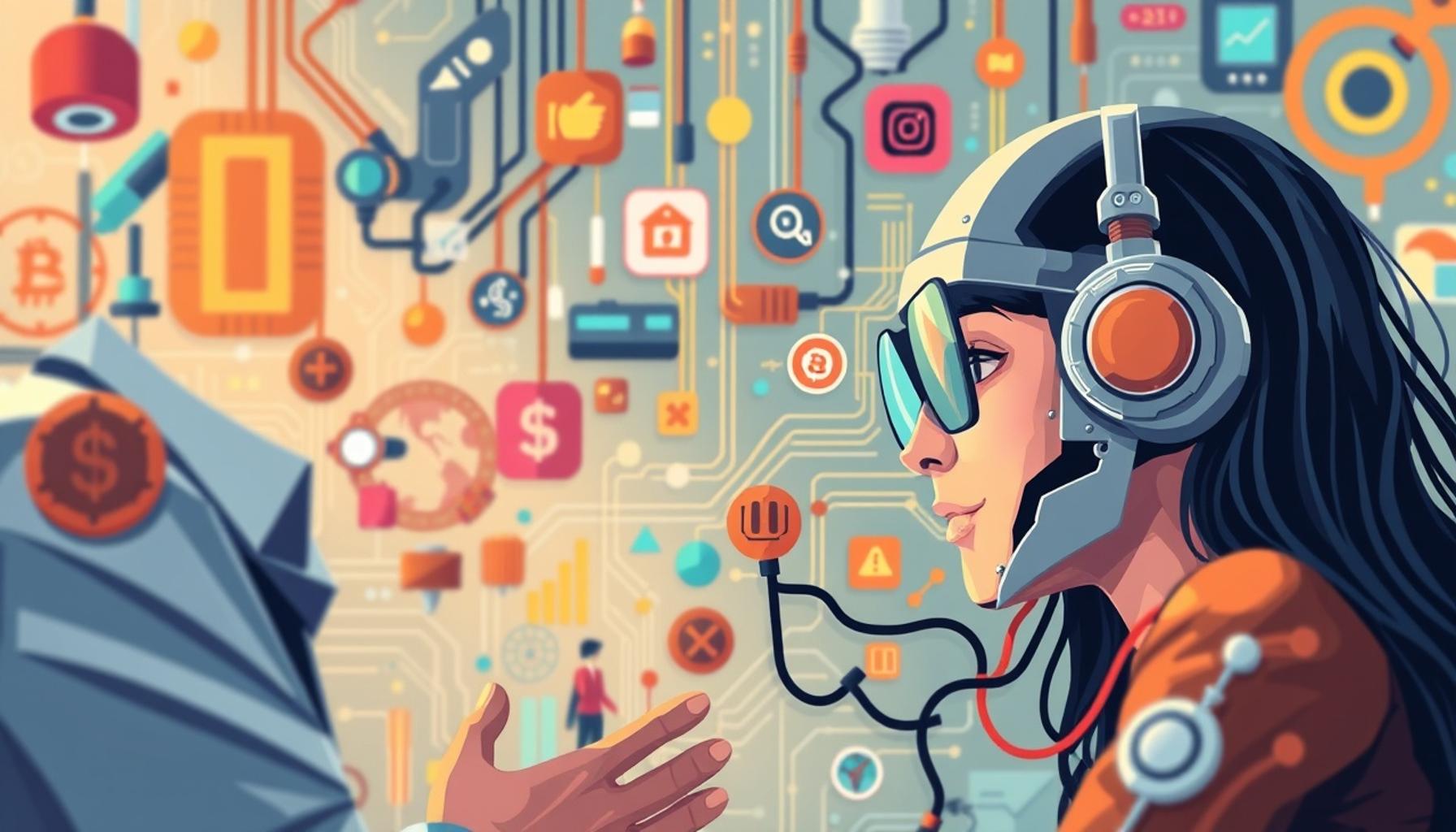
Technological Transformation in Communication
The rapid advancement of technology is reshaping how we communicate. Human-Machine Interaction has evolved profoundly, particularly with the rise of intelligent agents and their role in digital communication. As these agents become more sophisticated, they alter the landscape of our interactions in ways we may not yet fully comprehend. This phenomenon is notable not just for its innovation but for the diverse ways it influences personal and professional communications.
Consider the pervasive presence of intelligent agents in our daily lives. Among the most recognizable are:
- Voice-activated virtual assistants like Alexa and Siri, which have transformed how we manage tasks—from setting reminders to controlling smart home devices. These assistants utilize natural language processing to understand and respond to our queries, making interaction seamless.
- Chatbots providing customer service and support have become commonplace on retail websites, offering instant responses to customer inquiries. Their ability to operate 24/7 not only enhances efficiency but also improves customer satisfaction by reducing wait times.
- Personalized content recommendations on streaming platforms like Netflix and Spotify utilize sophisticated algorithms to analyze user behavior. This not only enriches the viewer’s experience but also shapes the way content is produced based on audience preferences.
These intelligent agents not only facilitate communication but also enhance efficiency, making them essential in various fields. Their influence extends from enhancing user experience to shaping business strategies. However, the question remains: how do they affect the way we communicate with one another?
The Evolution of Digital Communication Norms
As intelligent agents become integrated into our daily communications, traditional norms are evolving. The way we construct conversations is shifting from formal exchanges to shorter, more informal interactions. For instance, the use of emojis and shorthand in text messaging has gained immense popularity, allowing for quick responses that convey emotion and tone without lengthy explanations.
Ethical Implications Surrounding Automated Interactions
With the rise of automation in communication, fundamental ethical issues surface. Concerns around privacy, data security, and the potential for manipulation arise as people engage with these intelligent systems. Are users aware of how their data may be used, and what measures are in place to protect their information? These questions are essential as we navigate this new frontier.
Dependence on Technology in Communication
Furthermore, the growing reliance on technology to communicate leads to discussions about its impact on interpersonal relationships. While intelligent agents make it easier to connect across distances, there is a risk of reducing face-to-face interactions. Studies suggest that over-dependence on virtual communication can diminish emotional intelligence, leading to challenges in understanding nonverbal cues in personal interactions.
As we delve into these topics, the goal is to illuminate the complexities of human-machine interactions and invite readers to consider the future of communication in a technology-driven world. The history of human communication is marked by innovation, and as we embrace intelligent agents, we step into uncharted territory that requires thoughtful exploration and consideration.
DISCOVER MORE: Click here for insights on data privacy and security
Redefining Conversation in the Digital Age
In the rapidly evolving landscape of digital communication, intelligent agents are redefining not just how we communicate but also the very fabric of conversation itself. As these agents, ranging from sophisticated chatbots to more intuitive virtual assistants, become integral to daily interactions, we witness a cultural shift in communication norms. Increasingly, our dialogues are mediated by technology, raising intriguing questions about authenticity, engagement, and the essence of human connection.
One facet that exemplifies this transformation is the shift towards asynchronous communication. Traditional communication heavily relied on real-time exchanges, but intelligent agents have facilitated a transition towards formats that allow users to engage at their own pace. Email, social media messages, and even text exchanges are no longer constrained by time, allowing individuals to craft thoughtful responses rather than react impulsively. Consider, for example, the way businesses use chatbots for customer interactions. These automated systems handle inquiries while providing customers the liberty to respond when they feel most inclined. This shift influences not only the speed of communication but also the quality, allowing for more deliberate wording and reflection.
The Role of Emotion in Digital Conversations
Another significant aspect of human-machine interaction involves the integration of emotional intelligence into these systems. Modern intelligent agents are not merely programmed to respond; they are increasingly utilizing sentiment analysis to gauge users’ emotions and tailor interactions accordingly. This capability may range from offering empathetic responses during customer service chats to adjusting tones in voice-activated assistants based on prevailing user sentiments. Consequently, the boundaries between human and machine blur, as users often find themselves forming emotional connections with these entities, which can impact brand loyalty and user satisfaction.
Data-Driven Insights Shaping Communication Strategies
Utilizing big data and machine learning, intelligent agents are also revolutionizing the communication strategies organizations employ. By analyzing interactions, these agents can discern patterns in user behavior, providing businesses with insights that inform their marketing efforts and customer engagement strategies. For instance, data gathered through intelligent agents can reveal not just the most favored products but also the most effective ways to engage customers through tailored content. This data-driven approach enables companies to create communications that resonate with their audience, ultimately fostering deeper connections.
However, as we embrace this new era of communication, it is vital to remain cognizant of potential drawbacks. The rich tapestry of human conversation—characterized by nuance, ambiguity, and emotion—may become oversimplified. Are we risking the depth of our communications for the sake of efficiency? These are essential questions as we continue to explore the influence of intelligent agents on digital communication.
| Advantages | Impact on Digital Communication |
|---|---|
| Enhanced Efficiency | Intelligent agents streamline communication processes, reducing the time required for task completion. |
| Personalization | These agents analyze user data to tailor interactions, increasing user satisfaction and engagement. |
| 24/7 Availability | Intelligent agents provide round-the-clock support, ensuring users can connect whenever necessary. |
| Decision Support | They assist users in making informed choices by analyzing vast amounts of data quickly and accurately. |
In the framework of Human-Machine Interaction, intelligent agents are revolutionizing the landscape of digital communication, calibrating how humans interact with technology. The advantages listed in the table above illuminate the profound implications these systems have on communication strategies. Enhanced efficiency enables smoother workflows, while the capacity for personalization means users receive an experience uniquely suited to their preferences. Moreover, the 24/7 availability of intelligent agents exemplifies the fusion of technology with human needs, ensuring support is always just a message away. By leveraging data-driven decision support, organizations can foster environments where effective communication between humans and machines not only simplifies tasks but also enriches the overall user experience. This increasing reliance on technological agents invites a deeper investigation into their roles and the subsequent challenges they present in our digital communications.
DISCOVER MORE: Click here to learn about the importance of data architecture in AI solutions
Enhancing Personalization Through Intelligent Agents
One of the most profound impacts of intelligent agents on digital communication is their capacity to personalize interactions at an unprecedented scale. In a world where consumers increasingly demand tailored experiences, these agents leverage artificial intelligence (AI) and machine learning algorithms to curate content and recommendations that align with individual preferences. Platforms like Netflix, Amazon, and Spotify exemplify this trend, utilizing intelligent agents to analyze user behavior and suggest personalized content. This not only enhances the user experience but also cultivates a sense of companionship, as users feel more connected to brands that understand their tastes.
Moreover, the role of intelligent agents extends into the realm of email marketing. Companies are now deploying sophisticated email algorithms that segment audiences based on behavior, demographics, and previous interactions. By targeting communications with tailored messages and offers, businesses boost their engagement rates significantly. According to a study by Experian, personalized emails deliver six times higher transaction rates compared to non-personalized emails. This personalization fosters a dialogue akin to the nuances of a human conversation, making recipients feel valued and understood.
The Ethical Considerations of AI in Communication
As the integration of intelligent agents reshapes our communication landscape, it also invites scrutiny of ethical considerations surrounding privacy and consent. The collection and analysis of personal data, to fuel these intelligent systems, pose significant concerns in terms of user privacy. Despite the benefits of personalized communication, consumers are increasingly wary of how their information is used. A Pew Research Center study noted that 79% of Americans expressed concerns over how their data is collected and used by companies. This growing skepticism underscores the need for transparency and ethical guidelines in the deployment of intelligent agents.
Moreover, the potential for bias in AI algorithms raises crucial questions about equity in digital communication. For instance, if data sets used to train intelligent agents are skewed, the resulting interactions may inadvertently perpetuate stereotypes or exclude marginalized groups. Organizations must take diligence to ensure that their intelligent systems are trained on diverse data sets, promoting inclusivity in communication and avoiding the amplification of existing inequalities.
The Future of Human-Machine Interaction
Looking forward, the evolution of human-machine interaction is promising yet complex. The advent of voice-activated technologies, such as Amazon’s Alexa or Apple’s Siri, signifies a shift towards more natural forms of conversation. These systems are increasingly capable of understanding context and nuance, allowing for more fluid and engaging interactions. An estimated 55% of U.S. households</strong are projected to own a smart speaker by 2025, highlighting the growing reliance on intelligent agents for everyday communication.
Additionally, advances in natural language processing (NLP) are paving the way for intelligent agents to not only respond to queries but also hold meaningful conversations. Language models, like OpenAI’s GPT-3, demonstrate this emerging capability, blurring lines between human and machine dialogue. As these technologies mature, the potential to create rich conversational experiences could foster deeper connections between users and intelligent agents, transforming how we perceive and utilize digital communication.
However, the ultimate question remains: as we embrace intelligent agents in our communications, how do we balance the benefits of efficiency and personalization with the need for genuine human connection? This continuing dialogue will shape the future of digital interaction across industries, prompting a re-evaluation of our relationship with technology.
DISCOVER MORE: Click here to learn about the impact of machine learning on education
Conclusion: Navigating the Intersection of Human and Intelligent Agents
As we forge deeper into the realm of human-machine interaction, the influence of intelligent agents on digital communication cannot be overstated. These agents not only enhance personalization and user engagement but also hold the potential to redefine how we communicate with technology and with one another. The ability of intelligent agents to analyze behavior and preferences allows brands to tailor experiences that resonate with consumers, addressing their unique needs and desires.
However, as we embrace these innovations, we must also confront the accompanying ethical dilemmas. Issues of privacy, data security, and algorithmic bias are paramount, demanding accountability from organizations that deploy these technologies. The skepticism voiced by consumers regarding data usage is a call to action for businesses to uphold transparency and foster trust. The challenge lies in ensuring that intelligent agents are developed and implemented in ways that are not only effective but also equitable.
The future of digital communication will likely involve a dizzying array of intelligent agents integrated into our daily lives, possibly enhancing our interactions in ways previously unimagined. As systems continue to evolve, they may blur the lines between human and machine discourse, offering increasingly realistic conversational experiences. Yet, the core of effective communication will always be the human connection. Striking a balance between leveraging intelligent agents for efficiency while nurturing meaningful human interactions will be essential.
Ultimately, the discourse surrounding intelligent agents is a pivotal one that stresses the need for continuous reflection on our relationship with technology. How we navigate this intricate landscape will define not only the future of digital communication but also the dynamics of our society as we seek to maintain the essence of authentic connection in an increasingly automated world.