

Understanding Convolutional Neural Networks
In today’s world, Convolutional Neural Networks (CNNs) are at the forefront of artificial intelligence technologies, particularly in the realm of computer vision. These networks mimic the way humans perceive visual data, allowing computers to interpret images in a manner that was once thought to be the exclusive domain of human beings. This transformative ability has led to revolutionary advancements across a multitude of industries, demonstrating the power and potential of integrating AI solutions into practical applications.
Key Features of CNNs
The sophistication of CNNs lies in their architecture, which is specifically designed to process pixel data efficiently. One of the standout features is Hierarchical Feature Learning, which enables the network to identify simple patterns in the lower layers, such as edges or textures, and gradually build up to more complex forms like shapes and objects in the higher layers. This step-by-step learning mimics human cognitive processes and is paramount for tasks that require detailed image analysis.
Additionally, CNNs maintain a Spatial Hierarchy that preserves the relationships between pixels. This preservation is crucial for tasks such as image recognition, where understanding the position and context of objects within an image can drastically enhance accuracy. For example, differentiating between a cat and a dog not only requires identifying individual features (like whiskers or ears) but also understanding their arrangement within the context of the animal’s overall shape.
Another essential component is the use of Pooling Layers, which downsample the input images. By summarizing the salient features while discarding less important information, pooling helps reduce the computational load on the network. This enables faster processing and allows CNNs to function in real-time applications, such as navigation systems in autonomous vehicles or facial recognition software used in security cameras.
Real-World Applications of CNNs
The versatility of CNNs is evident in their numerous applications across varied fields. In the domain of Image Classification, companies like Facebook leverage CNNs to automate the identification of objects and improve user experiences through advanced tagging systems. Similarly, in security, CNNs play a pivotal role in Face Recognition, which enhances security in smartphones and biometric systems by accurately verifying identities. Major technology firms, including Apple, utilize CNNs to unlock devices through facial recognition, highlighting their value in personal security.
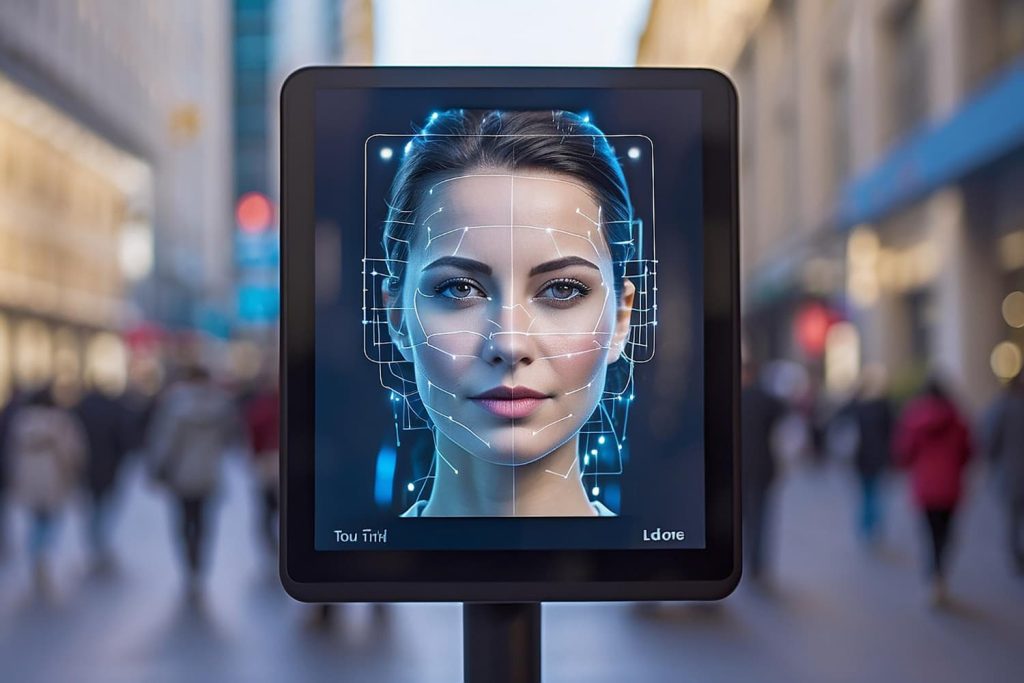
Moreover, CNNs have made significant inroads in Medical Imaging, where they assist healthcare professionals by analyzing images from X-rays, MRIs, and CT scans to detect anomalies. For instance, a CNN can help radiologists identify tumors in medical images more accurately and quickly than traditional methods, allowing for timely intervention.
As the field of artificial intelligence continues to progress, understanding CNNs’ architectures and capabilities becomes increasingly essential. Their ability to learn and adapt promises a plethora of innovative applications, suggesting that the potential of computer vision is still largely untapped. With continuous research and development, we can expect groundbreaking advancements that will further integrate these technologies into our daily lives, thus reshaping our interactions with the digital world.
DISCOVER MORE: Click here to dive deeper
The Mechanics of Convolutional Neural Networks
To appreciate the power of Convolutional Neural Networks (CNNs), it is important to delve deeper into their mechanics. CNNs operate through a series of layers that work harmoniously to process and interpret visual data. The network begins with an Input Layer, where raw pixel data is fed into the system. This initial step is crucial, as the quality of the input directly affects the network’s ability to perform tasks accurately.
Following the input, the CNN employs multiple Convolutional Layers, tasked with extracting features from the images. These layers use filters or kernels that slide across the input data, performing mathematical operations that highlight relevant patterns while reducing dimensionality. The convolutional operation can be understood as a way to detect edges, textures, and ultimately shapes within an image. This repeated application of filters at varying layers allows the CNN to build a comprehensive understanding of the visual input.
At the core of CNNs is the utilization of Activation Functions, which introduce non-linearity into the network. This non-linearity is essential, as it enables the CNN to learn complex patterns beyond linear combinations. The most commonly used activation function is Rectified Linear Unit (ReLU), which enhances performance by speeding up training and reducing the likelihood of vanishing gradient problems.
The Role of Pooling in CNNs
In addition to convolutional operations, CNNs also integrate Pooling Layers, strategically placed to downsample feature maps. Pooling functions, such as max-pooling and average-pooling, help in summarizing the output by selecting the most significant features while reducing computational requirements. This not only makes the network more efficient but also helps mitigate overfitting—a common challenge in deep learning models.
The structure of CNNs allows them to learn in a manner that mirrors human cognition, resulting in networks that can recognize and understand visual information with remarkable accuracy. Here are some notable functions of CNNs that contribute to their efficacy in computer vision:
- Feature Extraction: Identifies and learns intricate patterns within the data.
- Dimensionality Reduction: Compresses input without losing critical information.
- Adaptive Learning: Automatically adjusts to the dataset, continuously improving performance through training.
As CNNs evolve, their architectures grow increasingly complex, involving deep learning techniques that stack numerous layers for more intricate visual processing. This deep hierarchy enables CNNs to tackle sophisticated tasks like object detection, scene understanding, and even image generation. As a result, their application in computer vision is becoming indispensable across industries ranging from entertainment and automotive to healthcare and agriculture.
In summary, understanding the mechanics behind CNNs provides invaluable insights into how these networks are revolutionizing computer vision. As researchers and developers continue to innovate and enhance their capabilities, the potential for CNNs in transforming our interactions with technology is truly boundless.
| Category | Description |
|---|---|
| Image Classification | Convolutional Neural Networks (CNNs) excel in classifying images with high accuracy, enabling automation in various fields like healthcare, retail, and transportation. |
| Object Detection | CNNs improve real-time object detection, allowing systems to identify and localize objects within an image, crucial for applications in surveillance and autonomous vehicles. |
In the realm of computer vision, Convolutional Neural Networks have dramatically transformed how machines interpret visual data. One of the most remarkable applications is in image classification. CNNs analyze pixel patterns, extracting features that make them highly effective in categorizing vast amounts of visual data. For instance, in medical imaging, automated systems leveraging CNNs can accurately classify X-rays, MRIs, or CT scans, significantly reducing the workload for radiologists and enabling timely diagnoses that can save lives.Furthermore, the application of CNNs in object detection empowers machines to not just recognize objects but also to pinpoint their locations. This capability is revolutionizing multiple industries, including security, where surveillance systems can autonomously track individuals or vehicles. In the automotive sector, this technology is key for developing self-driving cars that can navigate complex environments by detecting pedestrians, road signs, and other vehicles in real-time. The combination of speed and accuracy in CNNs positions them as integral to the future of computer vision advancements. By harnessing the capabilities of Convolutional Neural Networks, we delve deeper into fields that once seemed only achievable in science fiction. With each innovation in this technology, the potential applications expand, revealing exciting pathways for both businesses and consumers.
DIVE DEEPER: Click here to discover more
Real-World Applications of Convolutional Neural Networks
The impact of Convolutional Neural Networks (CNNs) extends far beyond theoretical concepts, as they have found practical applications in a variety of fields, fundamentally altering how industries operate. Their utility in computer vision has led to transformative innovations, some of which have captured significant attention across sectors such as healthcare, automotive, retail, and agriculture.
Healthcare: Image Analysis & Diagnosis
CNNs have become pivotal in the healthcare domain, revolutionizing how medical imaging is conducted. One of the most compelling examples is in the analysis of radiology images—X-rays, MRIs, and CT scans. Traditional methods of diagnosis often depended on expertise and experience of radiologists, but CNNs now automate this process by accurately detecting anomalies such as tumors or fractures. For instance, studies show that CNNs can match or even surpass the diagnostic accuracy of seasoned professionals. A notable case involved a CNN that achieved an accuracy of over 94% in identifying pneumonia from chest X-rays, underscoring their potential to enhance diagnostic precision and reduce human error.
Automotive Industry: Autonomous Vehicles
The automotive sector is experiencing a seismic shift thanks to CNNs, particularly in the development of self-driving cars. These vehicles utilize CNNs to interpret vast amounts of visual data gathered from cameras and sensors, allowing them to recognize traffic signs, pedestrians, and obstacles on the road. Tesla, for instance, employs CNNs in its Autopilot feature, enabling the car to navigate complex environments while simultaneously ensuring passenger safety. The technology continuously learns and improves with the help of data collected from millions of driving instances, enhancing its performance over time.
Retail: Enhanced Customer Experiences
In the retail landscape, CNNs are being leveraged to optimize the shopping experience for consumers. Retail giants are deploying image recognition technologies to create personalized marketing strategies and improve inventory management. For example, companies like Amazon employ CNNs in their computer vision systems to analyze customer preferences based on their shopping history and behavior. This capability not only boosts customer satisfaction through personalized recommendations but also streamlines supply chain processes by predicting product demand more accurately.
Agriculture: Precision Farming
The application of CNNs in agriculture represents another innovative intersection of technology and traditional practices. Farmers utilize CNNs to analyze images captured by drones and satellites, enabling them to monitor crop health, identify diseases, and assess yield potential. For instance, CNNs can process multispectral images to detect subtle changes in plant health that are invisible to the naked eye, such as early signs of pest infestations or nutrient deficiencies. This level of precision empowers growers to take timely action, ultimately optimizing crop management and enhancing food security.
As CNNs continue to evolve and adapt, their applications in computer vision are likely to expand even further, creating new opportunities and reshaping existing paradigms. The crossroads of CNN technology and practical application paints a fascinating picture of a future where visual data analysis can drive significant improvements in efficiency and decision-making across numerous sectors.
DISCOVER MORE: Click here to learn about the impact of unstructured data on AI
Conclusion
In conclusion, the rise of Convolutional Neural Networks (CNNs) marks a pivotal moment in computer vision, driving innovations that are reshaping multiple sectors. As we’ve explored in various domains such as healthcare, automotive, retail, and agriculture, the capabilities of CNNs extend beyond mere theoretical underpinnings to deliver real, measurable benefits that enhance operational efficiency and improve outcomes.
The ability of CNNs to analyze and interpret visual data accurately is enabling significant advancements, such as early disease detection in medical imaging and enhanced decision-making in autonomous vehicles. Retailers are discovering how to tailor experiences based on individual customer behavior, while farmers are leveraging satellite imagery and drone technology to implement precise farming practices.
As these applications evolve, there is immense potential for CNNs to tackle even more ambitious challenges, including environmental monitoring, disaster response, and smart city initiatives. However, the journey is not without challenges. Issues surrounding data privacy and the ethical implications of AI must be addressed as we integrate CNN technology deeper into our daily lives. Moreover, as researchers continue to refine these algorithms, the quest for greater accuracy and efficiency will persist, opening doors to new discoveries.
Ultimately, CNNs embody an exciting frontier in artificial intelligence, driving us towards a future where efficient visual data analysis becomes an integral part of our societal framework. The ongoing exploration and application of this technology promise to redefine not only how we interact with machines but also how we perceive and respond to the world around us.